Should You Message Several People at the Same Company on LinkedIn? A Direct Answer
Yes, if each person gets a different reason to reply and the messages are staggered. When multi-threading on LinkedIn helps, when it backfires, and how to run it.

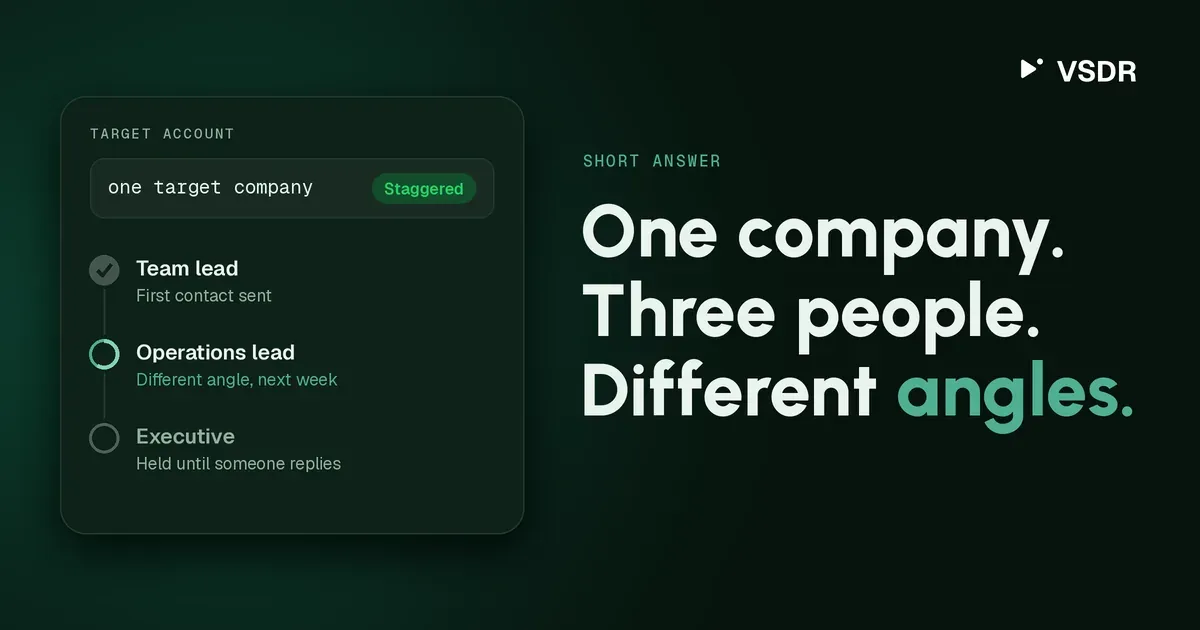
Yes, for most B2B deals you should reach more than one person at a target company on LinkedIn, because decisions are rarely made by one person and your first contact may not be the right one. The rule is to stagger the messages and give each person a different reason to reply. Sending the same note to five colleagues on the same day is the version that backfires, because colleagues compare notes.
Why one contact per account is fragile
A single contact can be on leave, new in the role, not the decision maker, or simply not interested personally while the team has the problem you solve. If the only thread into an account goes quiet, the account goes quiet with it. A second or third contact, approached on their own terms, gives the account more than one chance without repeating the same pitch.
How to sequence contacts at one company
- Start with the person closest to the problem. Usually a head of function or team lead, not the most senior name on the list.
- Wait before adding the next. Leave the first thread time to work, at least a week or so, before contacting a colleague.
- Change the angle for each role. An operations lead hears about day-to-day pain. An executive hears about outcomes. A user hears about what changes in their week.
- Never pretend the others do not exist. If someone asks whether you have contacted their colleague, say yes and why.
- Stop the account when anyone replies. Then decide together who else should be involved. If an agent runs your LinkedIn outreach, make pausing the rest of the account on a reply part of its instructions, and step in on the thread yourself when it matters.
Three ways to run it
| Approach | When it fits | Main risk |
|---|---|---|
| One contact at a time | Small accounts, senior buyers | Slow if the first contact is wrong |
| Staggered, different angles | Most mid-size and larger accounts | Needs tracking across threads |
| Everyone at once, same message | Rarely fits | Looks like a blast and gets shared internally |
The staggered approach is the default for good reason. It reaches the account from more than one side without making any single person feel targeted.
Where this does not work
At very small companies, a second message usually lands on the same desk or the desk next to it, and it reads as pressure. One thoughtful contact is better.
It also backfires when your list is all senior leaders at the same firm. Executives talk to each other, and three similar notes in a fortnight look like a campaign rather than a conversation. Pick one, and earn the introduction to the others.
And if you cannot track which colleague got which message, do not start. Two people at one company receiving near-identical notes from two different senders on your team is the fastest way to look automated.
FAQ
How many people per company should I contact? Two or three is a sensible ceiling for most accounts. More than that is usually a list problem, not a reach problem.
Should different team members message different contacts? It can work, but one person should own the account so the messages stay coordinated.
Is multi-threading worth it for small deals? Usually not. It suits deals where several people influence the decision.
Do I need a separate seat for account-based outreach? Not by default. One outreach seat can work several contacts per account. See VSDR pricing for the seats and monthly lead allowance on each plan.
